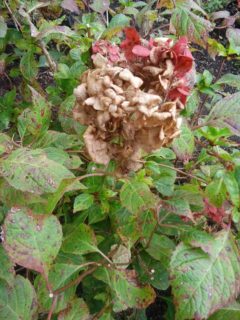
This year has been quite a rainy one and along with the weather, unwanted visitors have arrived into the gardens; namely fungus. Although the plants have been well-hydrated, which is definitely a positive, fungus disease seems to have spread rapidly; not so wonderful. The disease spreads from one leaf to another and then to the next plant seemingly unstoppable. Fungus thrives in wet, humid conditions and poor air circulation, basically this Summer season we have had. I’ve seen evidence of this fungal spread on my bigleaf hydrangeas (macrophylla), which are subject to black spotting (as are most hydrangeas). Black spotting is a fungal disease that appears on the leaves of Hydrangeae quercifolia, Hydrangeae arboreacens and Hydrangeae macrophylla.
One upside about the fungal disease, is that it is seldom fatal to affected plants.
Black spotting can originate from a number of fungal diseases, such as ANTHRACNOSE And CERCOSPORA leaf spot:
Cercospora leaf spot (Cercospora hydrangea) begins as brown or purple spots that develop centers of gray and halos of the brown and purple on the leaves at or near the base of the plant. The circular spots are often small and scattered and the leaves may eventually turn yellow-green and fall off.
Anthracnose produces large brown spots on leaves that eventually develop lighter brown or tan centers. The spots may also appear on blossoms and may appear angular if bordering a vein. Like cercospora leaf spot, the disease first manifests itself on the lower leaves of the plant in the form of purple to reddish spots.
Prevention
Spring pruning takes precedence in the prevention process, it’s important to remember to remove all diseased, dry, and dying leaves and stems. Remove up to one-third of the large older stems with clean, sharp pruning shears (Pruning only makes it spread more, if you are not cleaning your pruners between each cut). Trimming the stems increases aeration and reduces the dampness and humidity that cultivates the fungal diseases that cause black spots on leaves. When it’s rainy or humid, the leaves don’t dry very well, and if any of spot-causing fungus is around, the damp conditions enhance the disease. A second good time to thin is right after the plants flower. Removing diseased leaves as soon as they appear helps prevent further disease.
Clean up and remove any dropped diseased foliage from around the ground and make sure to seal it away in a garbage bag so that spreading is decreased. The fungus can become airborne and reinfect the plant if not properly disposed of. When infected leaves brown and drop, the disease spores stay in the vicinity. Depending on temperature and moisture, the problem will flare up to varying degrees year after year. The more diseased leaves you can remove and clean up from off the ground, the fewer spores will be around to re-infect. Also, put 2″ of organic mulch or compost down so that it smothers any of the spores that overwintered and are still present in the soil.
Spray a fungicide, such as Neem oil Spray, on your shrubs’ newly emerging leaves when wet or humid conditions are present. Coat them thoroughly top and bottom of leaves, repeating the treatment after rain or every 10 days to two weeks depending on conditions. Copper-based fungicides may help control bacterial leaf spot if applied in late spring. The key with any fungicide, though, is to get the spray on all the leaves before a disease flares out of control, so be sure to spray preventatively at the first signs of spotting. Make a habit of watering your hydrangeas at the base, so you don’t wash off the solution or enhance the disease with the overhead watering, leaf spot can be spread through water droplets.
When a plant is not placed in the right location or properly taken care of, it experiences stress and the plant can not combat disease to its fullest ability. Making sure that hydrangeas are well watered, don’t experience drought conditions, or too strong sun will help keep the plant healthy and strong and more apt to resist disease.