At the Nursery I get so many questions about pruning Hydrangeas and why haven’t my hydrangeas bloomed this year. Oftentimes, the reason for the non-blooming is due to untimely pruning. It’s not necessary to prune Hydrangeas unless it’s for shaping and maintaining size. The bare basics for maintaining healthy hydrangeas involves the removal of spent blooms (deadheading), which can be done safely at anytime, removing straggly canes at the soil line, and cutting dead branches. When a hydrangea gets old and woody, it can produce smaller blooms so pruning can improve a shrub’s vigor and increase the size of its flowers. Regular removal of a few of the oldest canes at the soil line can keep the shrub producing large and abundant flowers.
Not all hydrangea shrubs should be pruned at the same time. Those that bloom on old growth should only be pruned after flowering. Ones that bloom on new growth should be pruned before they wake up in spring or as they are going dormant in fall. First step is knowing that there are five varieties of hydrangea preferring different times for pruning.
Bigleaf Hydrangeas (H. macrophylla) mophead or lacecap varieties
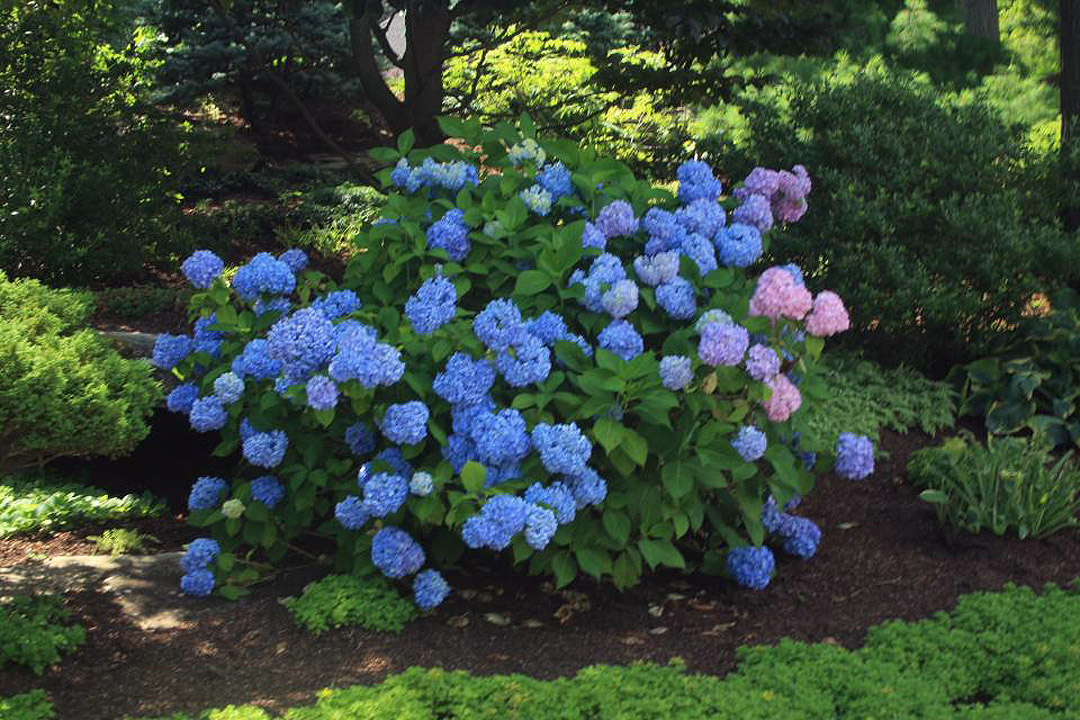
They are recognized by the wide-ranging colors of blue, violet, pink, purple, red and white. Generally pruned in late Summer, after blooming has ceased. However, some people prune them in fall while others do so in spring. As long as you do not cut any stems that have not bloomed, leaving healthy buds intact, they should be okay. Prune weak stems to the ground and cut or deadhead spent flowers and stems to the last bud.
Oakleaf Hydrangea (H.quercifolia)
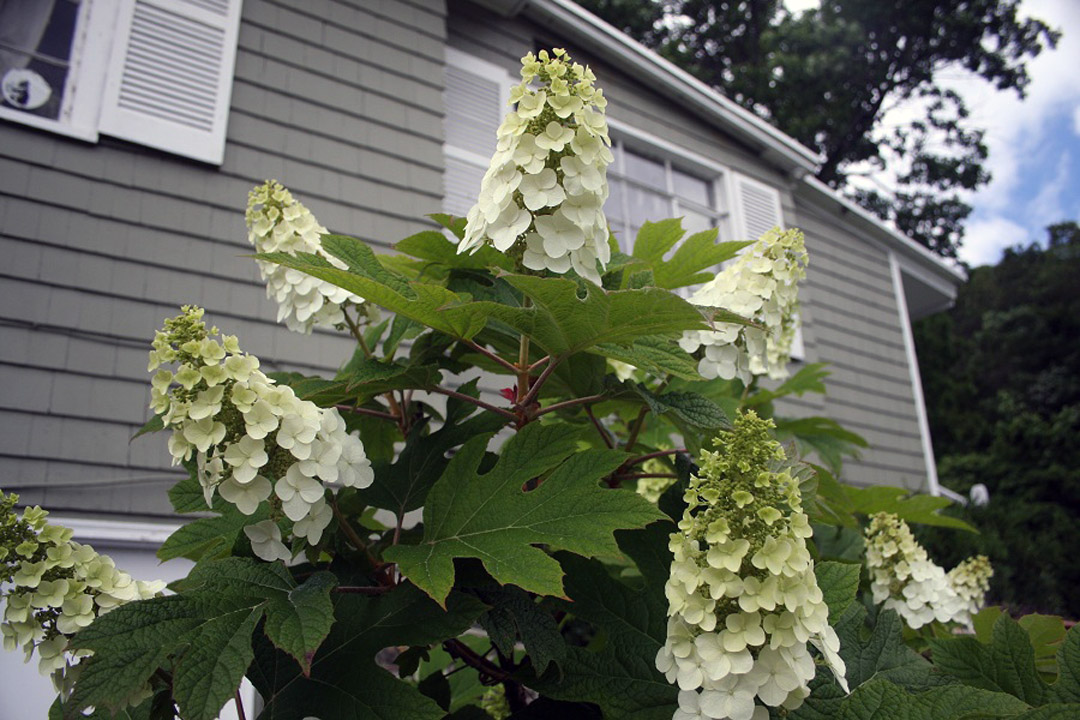
A native hydrangea that features cone shaped white blooms and oak leaf style foliage. Typically pruned in early Spring because many home owners enjoy their colorful fall foliage and russet colored blooms into late autumn, as well as their flower heads during the winter. Flowers bloom on old wood so should not be pruned until after flowering.
PeeGee Hydrangeas (H.paniculata)
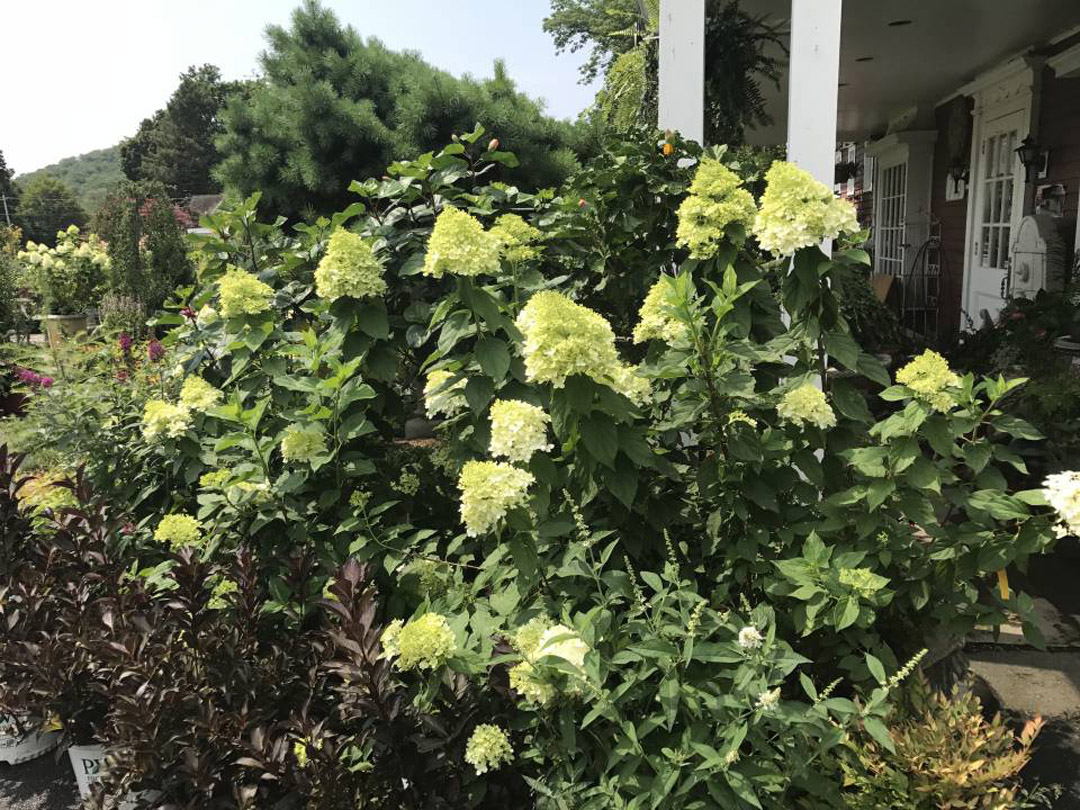
A tall variety of hydrangea that flowers large white cone shaped heads that turn a pinkish hue over the course of the season. This type of hydrangea can handle the Sun and prefers sunny areas over other hydrangeas and can be seen in tree-form because of its upright growth habit. It flowers on the current season’s growth, so they are generally pruned in late winter or early spring just before summer blooming or can be pruned in fall as well.
Annabelle Hydrangea (H. aborescens) Smooth or Wild Hydrangea
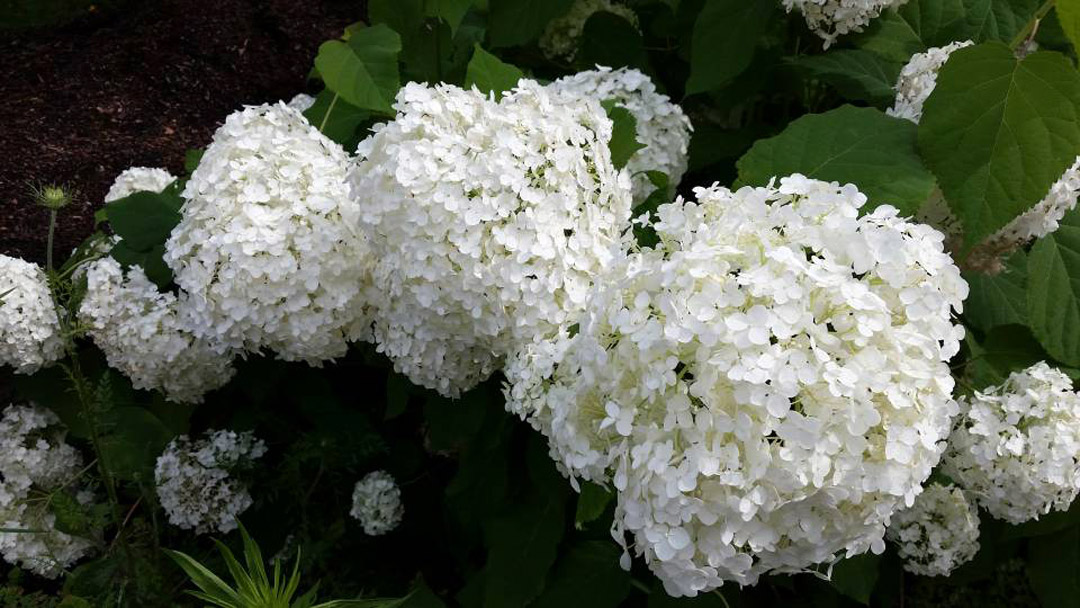
A small to medium shrub that blooms clusters of white round flowers. These hydrangea can handle harsh winters and harsh pruning better than any other hydrangea. They bloom on new wood so can handle being pruned to the ground in late winter but after continuously being cut back, they will start to produce weak canes that will not be able to support flower heads so try to limit doing so. Pruned late Summer or Early Fall, and some people choose to trim dead growth in early spring just prior to blooming.
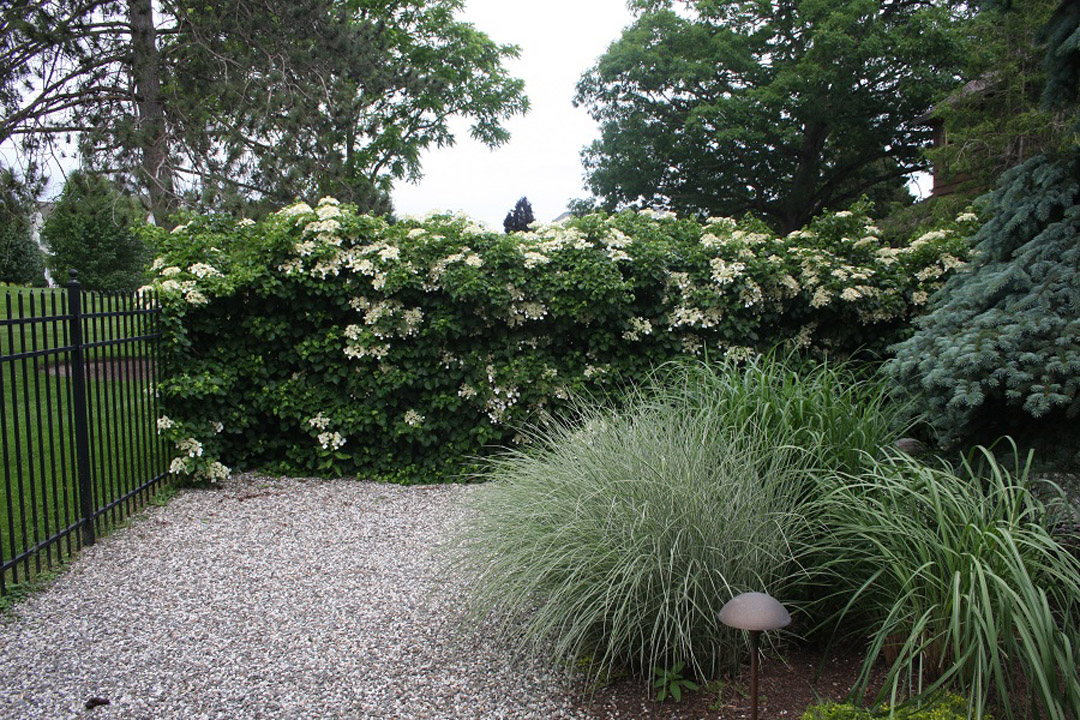
Climbing Hydrangea (H. anamala)
This type of hydrangea can be used on posting, fencing, and walls or as a ground cover. It takes time to establish but once started is long-lasting and rewarding. Often does not require pruning, unless for training of shape and containment. Hydrangeas of this type produce flowers from side shoots, which can be pruned in fall after blooming has ceased. Cut back shoots to the last healthy bud.
Another important tip for maintaining strong, healthy, and well formed hydrangeas is to maintain a framework of old growth to reduce floppiness. Some hydrangeas’ branches often fall over under the weight of their blooms, especially after overhead irrigation or after a good rain. To maintain a sturdy, upright habit maintain a height of 18 to 24 inches of old growth to support new growth.
Hydrangeas are a wonderful shrub to have in the garden. Their long bloom season and colorful flowers make them a remarkable specimen in any landscape. Whether grouped together as a hedge or a sporadic specimen in your yard they are a welcome addition, not only for their blooms outdoor but for their cut flowers to be brought indoors. Knowing how to prune and maintain will ensure that you will have these fantastic flowering shrubs for years and years to come.